Claude Code (Part 11)
Neil Haddley • April 10, 2026
Running Claude Code against a local Ollama model (qwen3-coder:30b) instead of the Anthropic API — no API costs and no data leaving the machine
Ollama added a launch claude command that starts Claude Code backed by a local model instead of the Anthropic API. I wanted to see how well it held up on a real task.
I ran the command to get started.
PROMPT
1ollama launch claude
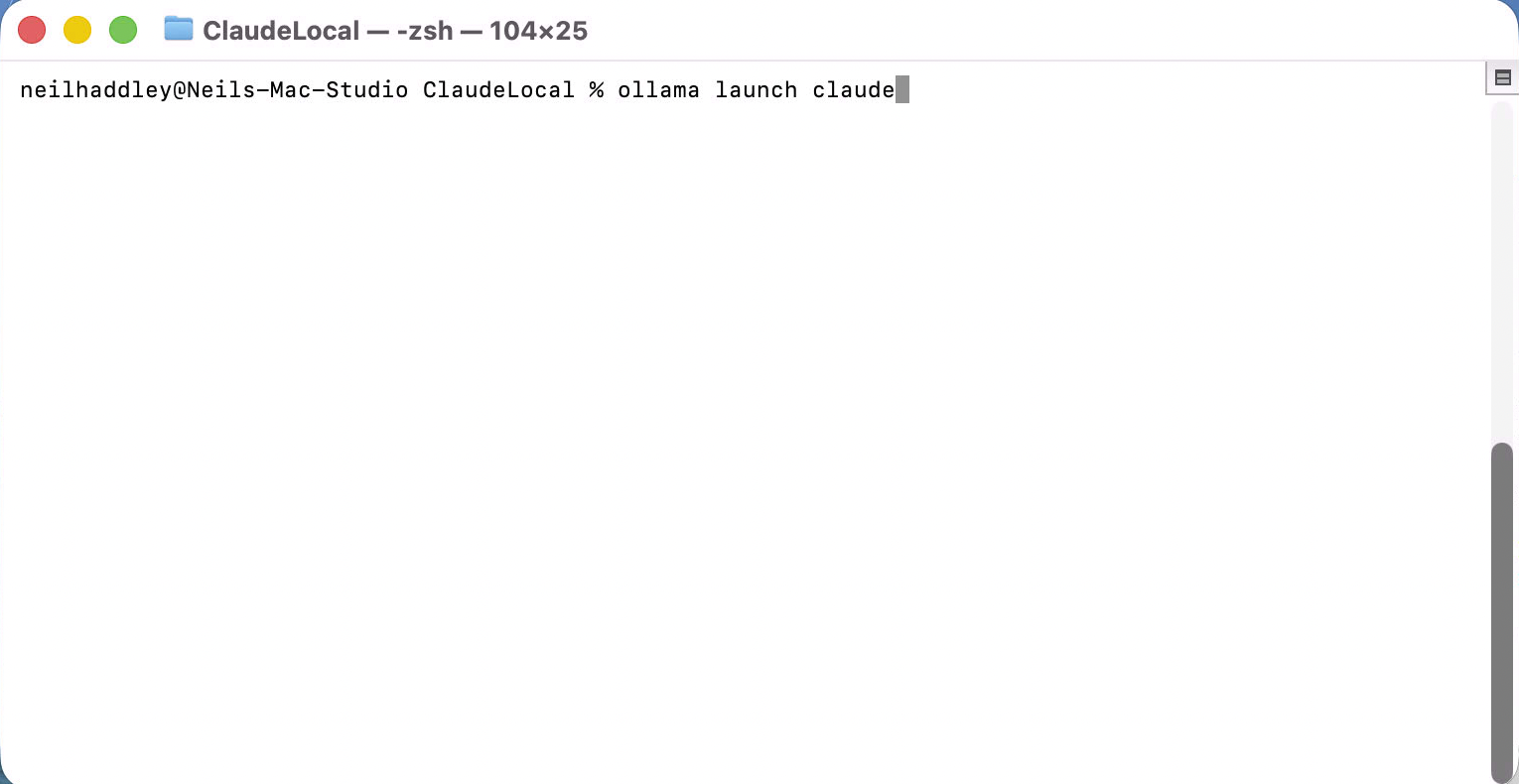
I ran ollama launch claude in the terminal
A model selection menu appeared with a recommended list sorted by capability.
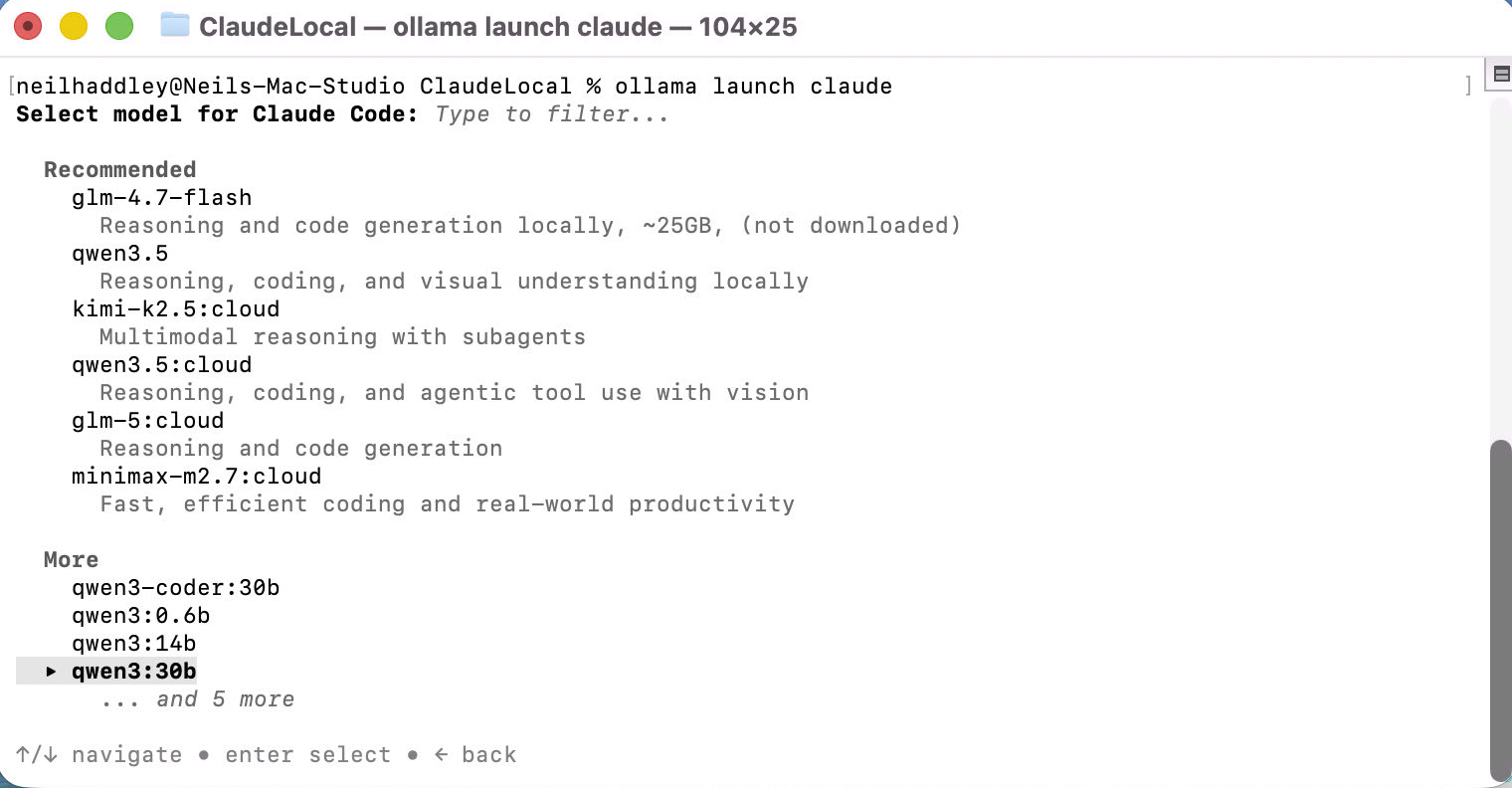
I saw the model picker — recommended models at the top, more options below
I scrolled down to qwen3-coder:30b and selected it.
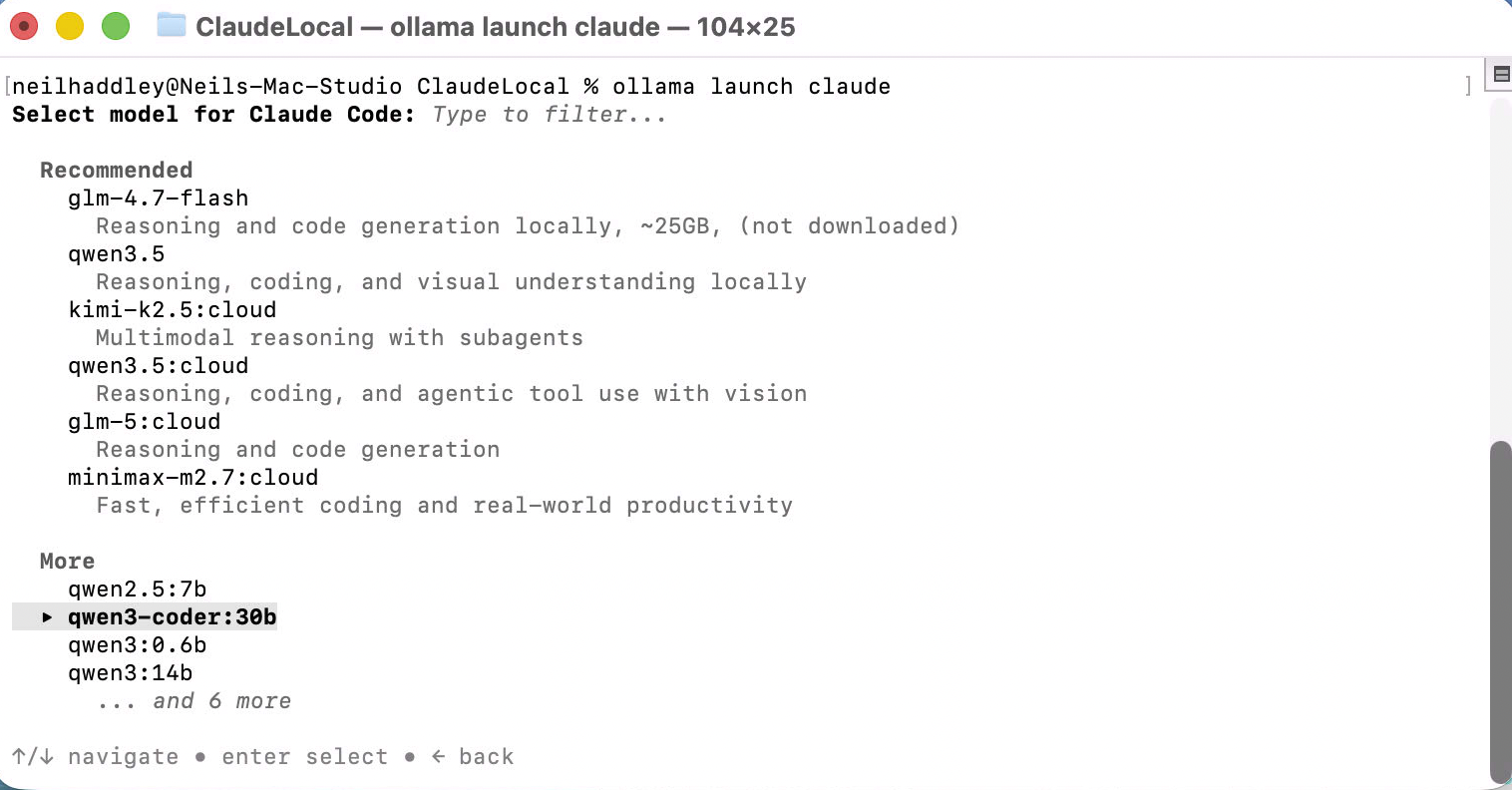
I selected qwen3-coder:30b from the list
Claude Code launched immediately, showing the familiar welcome screen — but now routing through the local Ollama model rather than the API.
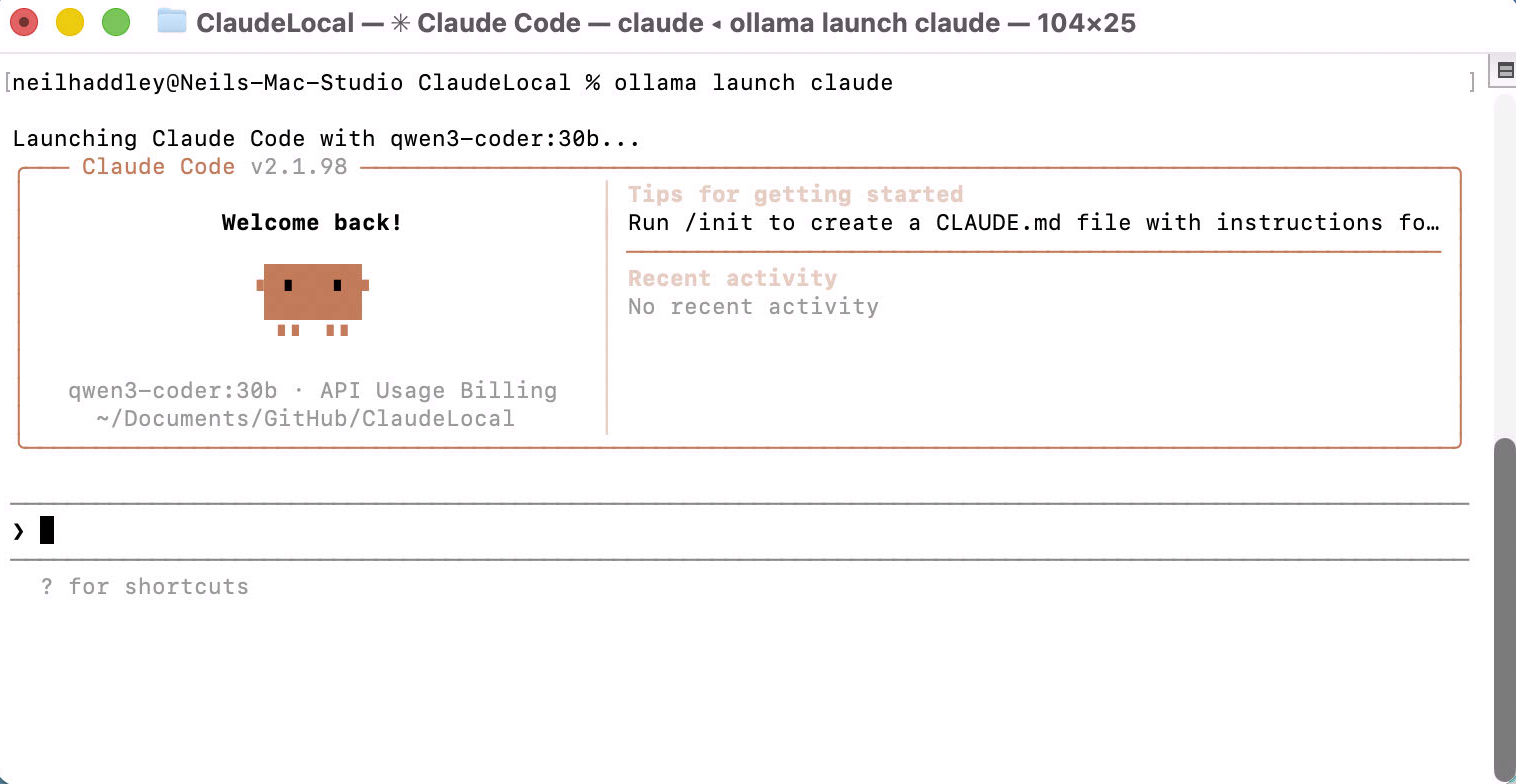
I saw Claude Code start up with qwen3-coder:30b as the backend
I gave it a task.
PROMPT
1create a web page breakout game
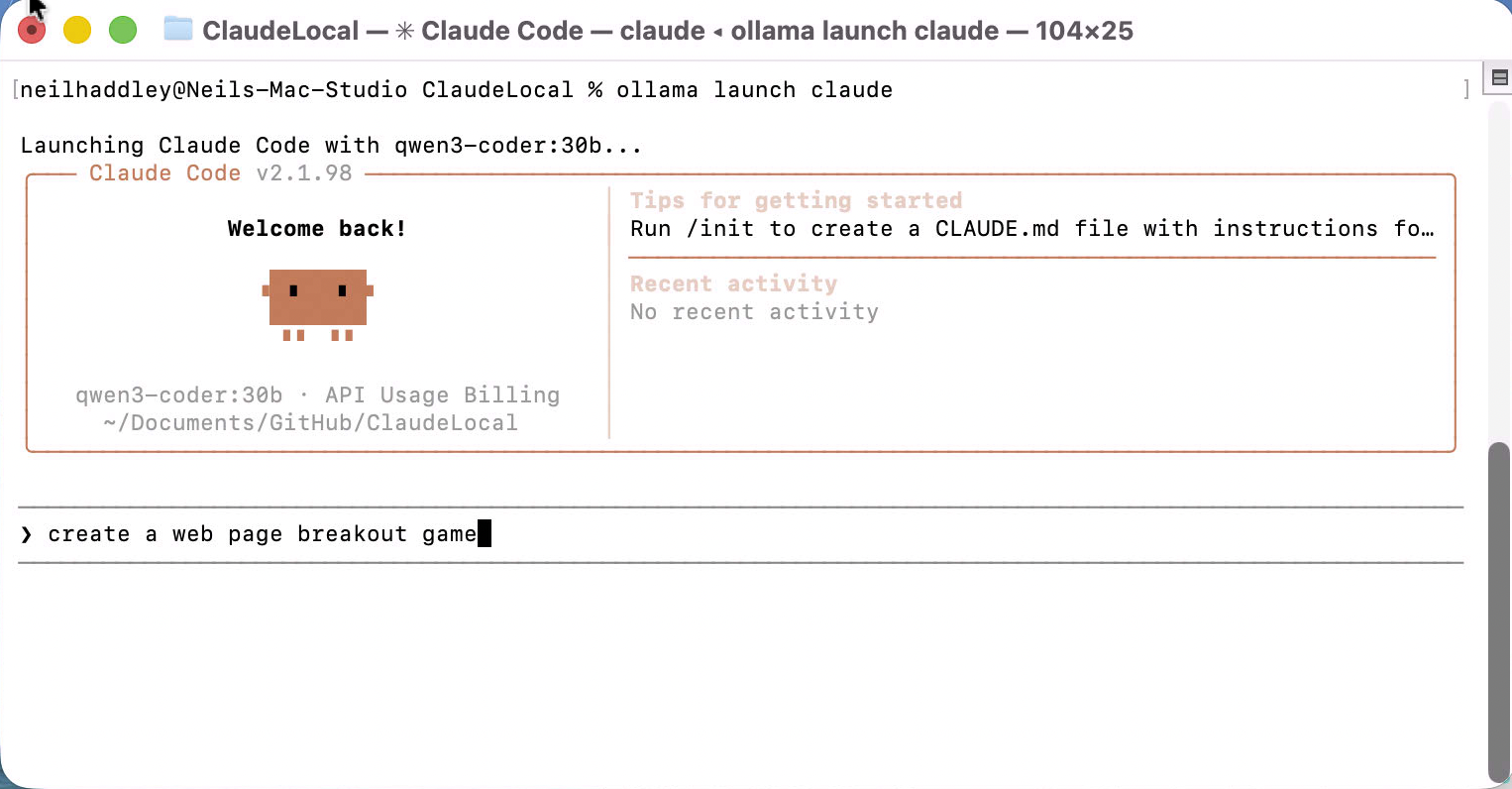
I typed the prompt to build a breakout game
While it was running I checked Activity Monitor. Ollama was using 41.48 GB of memory to run the 30B model — essentially the whole machine.
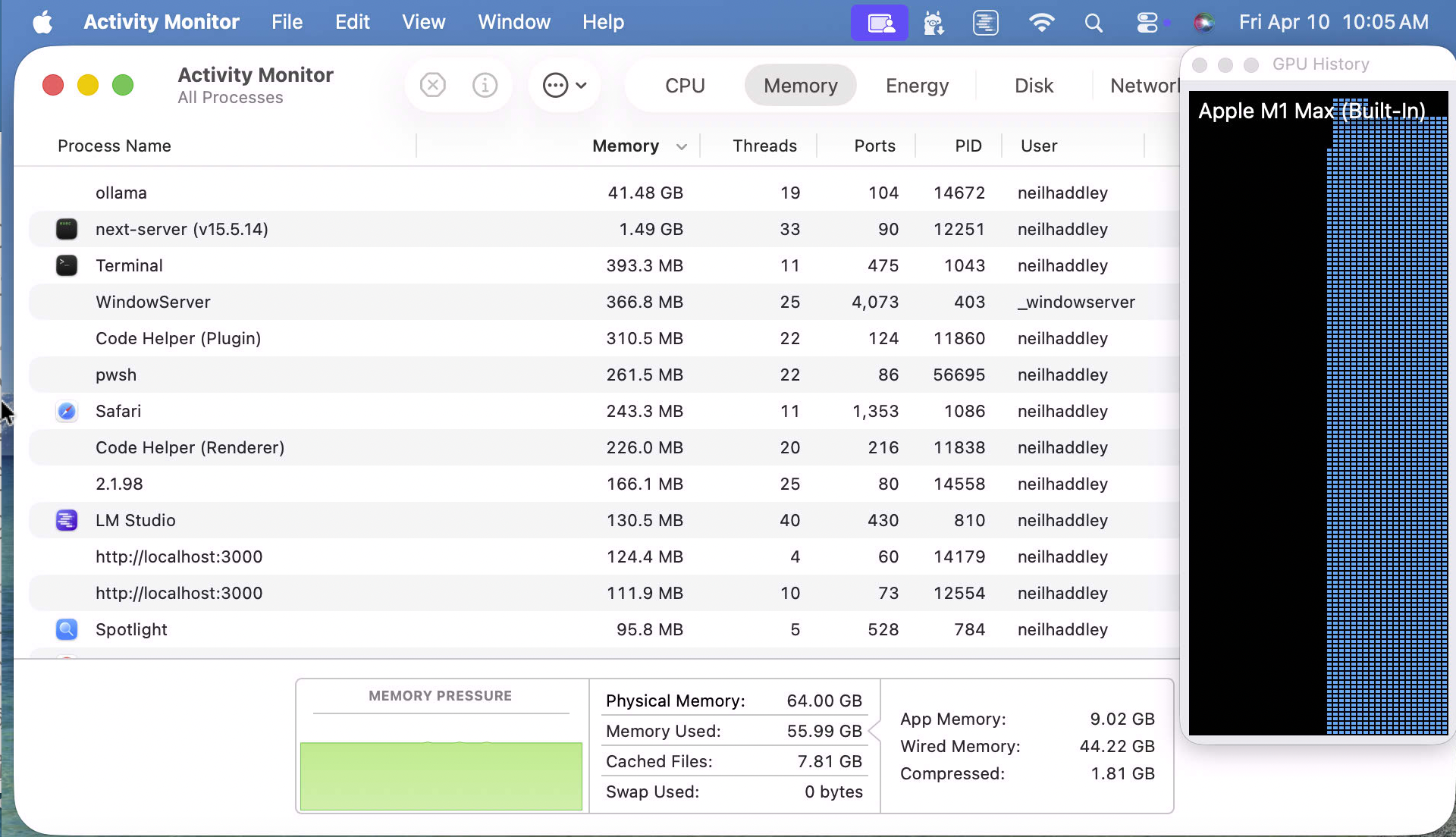
I saw ollama consuming 41.48 GB RAM to run the model locally
The model asked to create breakout.html.
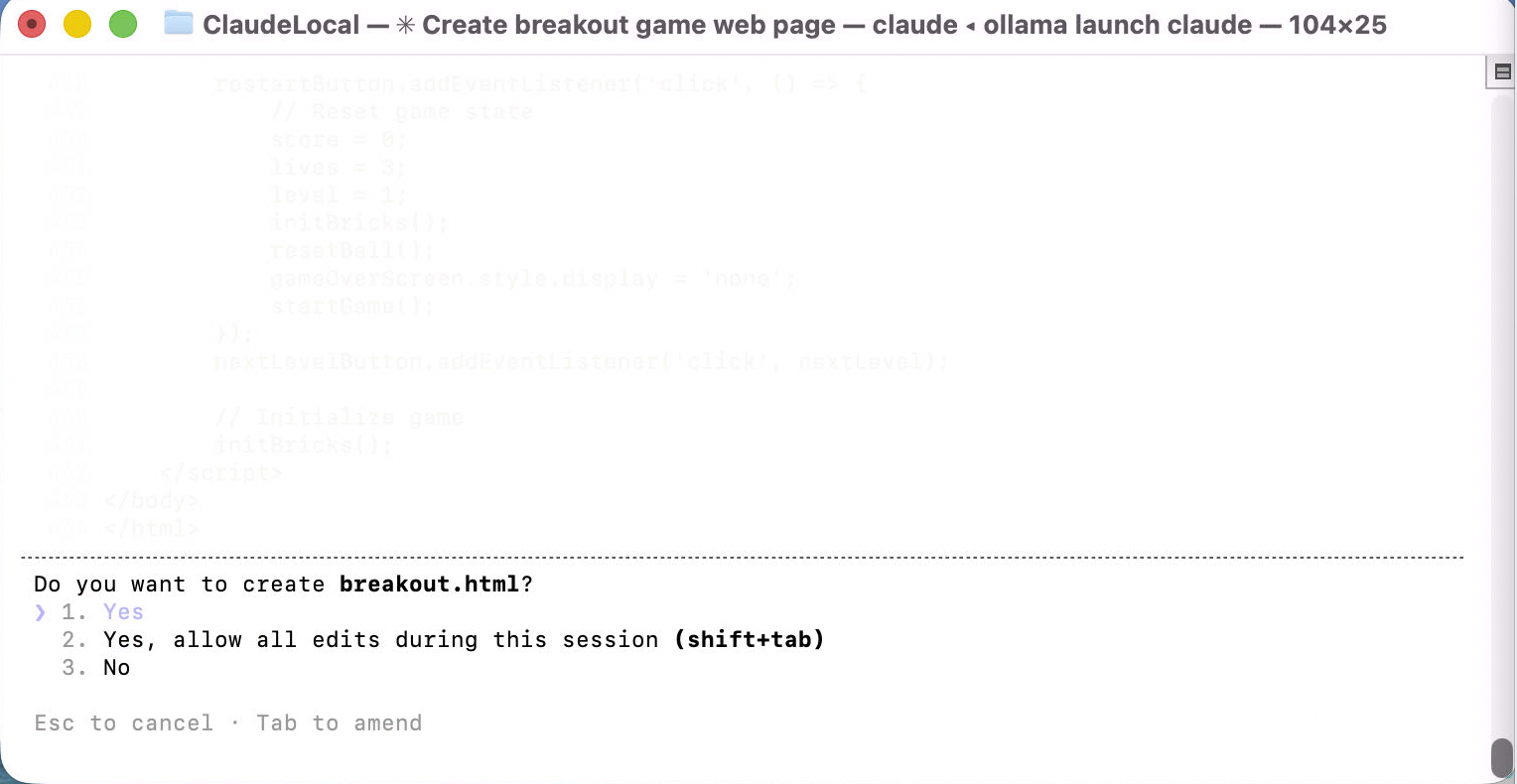
I was asked to approve creating breakout.html — I clicked Yes
It wrote 444 lines of HTML, CSS and JavaScript in one shot.
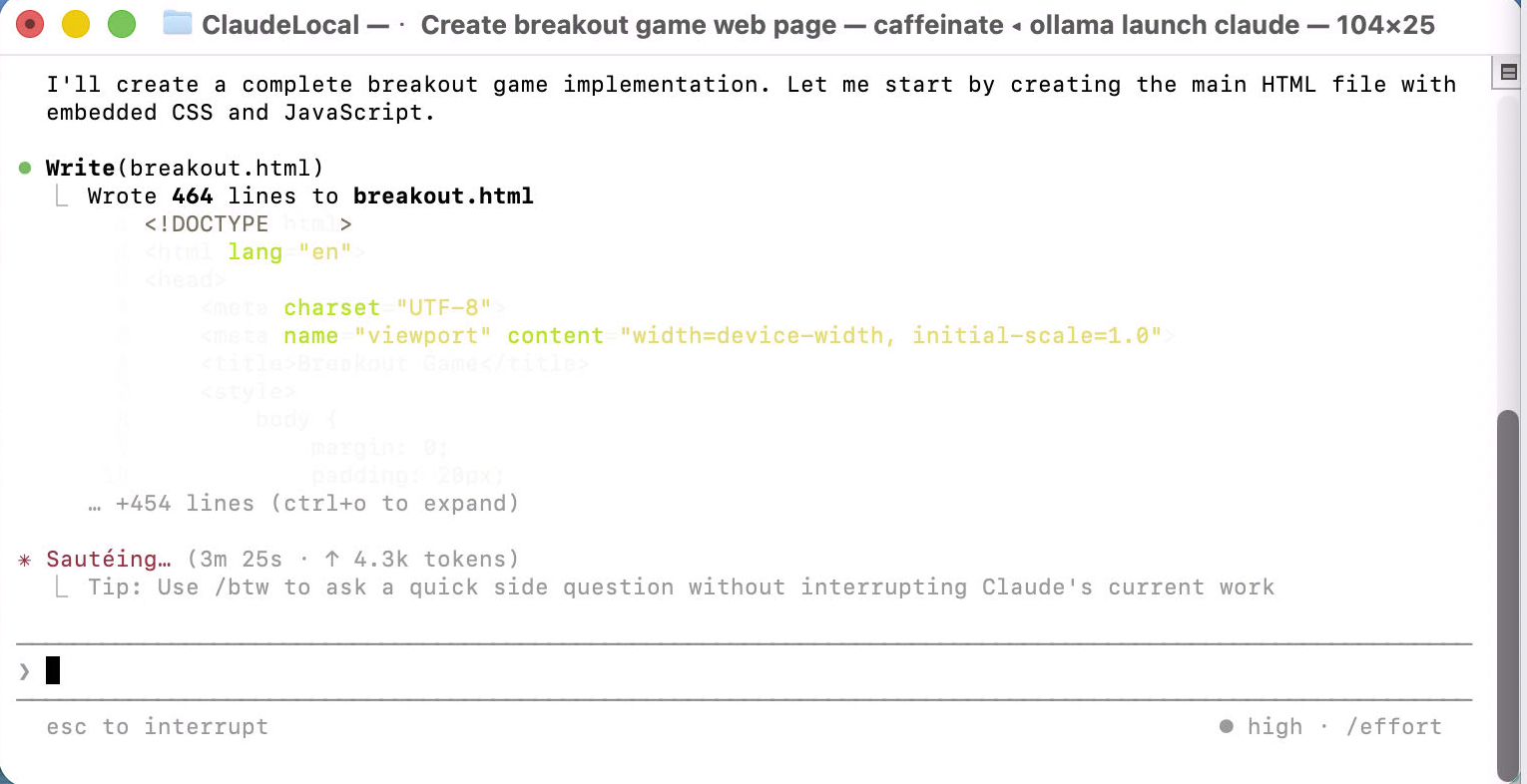
I watched it write 444 lines to breakout.html
The completion summary listed score tracking, multiple levels, a lives system, game over and win screens, and responsive design. It took 3 minutes 40 seconds.
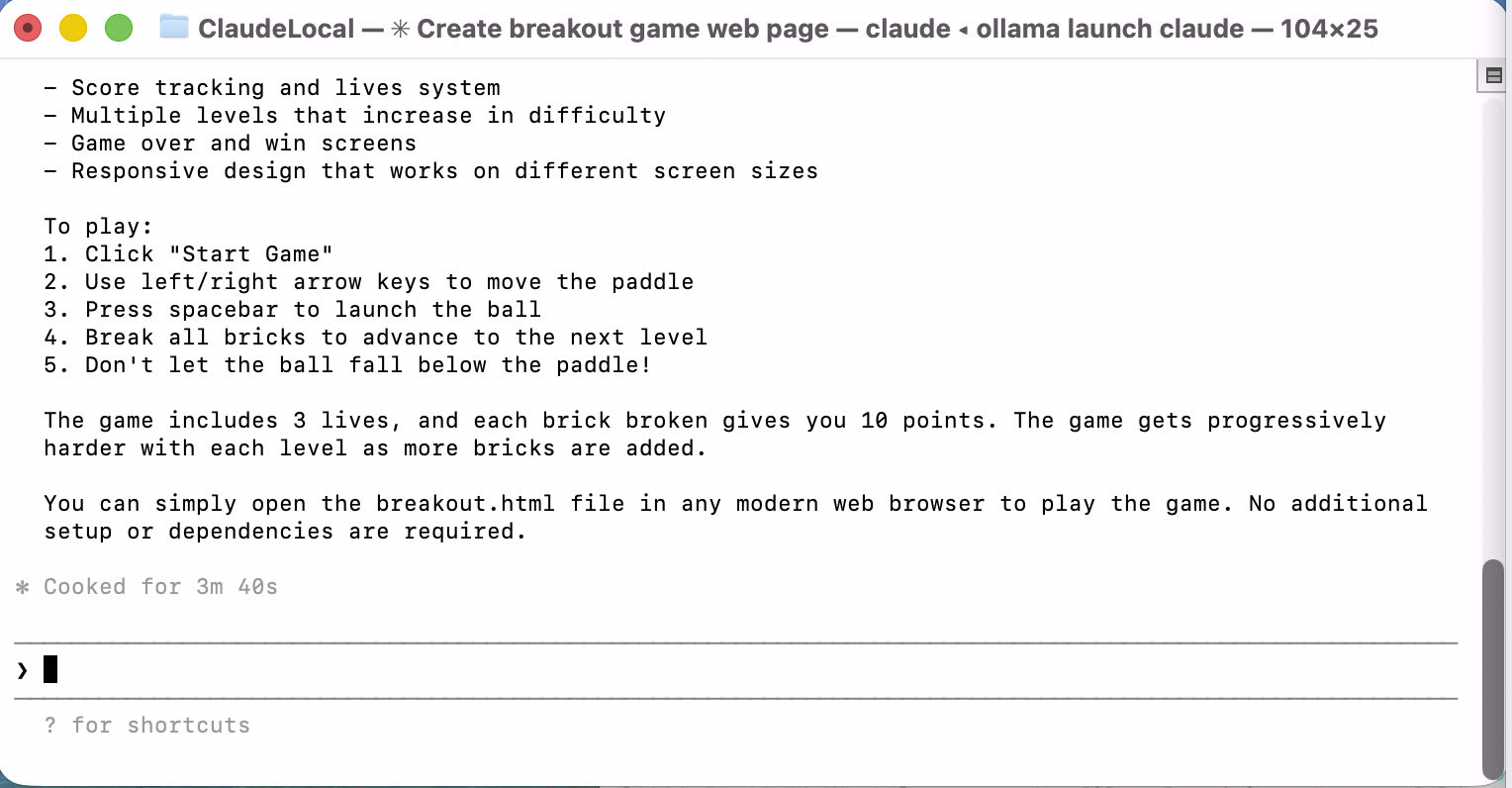
I read the summary — full feature set, cooked in 3m 40s
The model then offered to open the page with a local server.
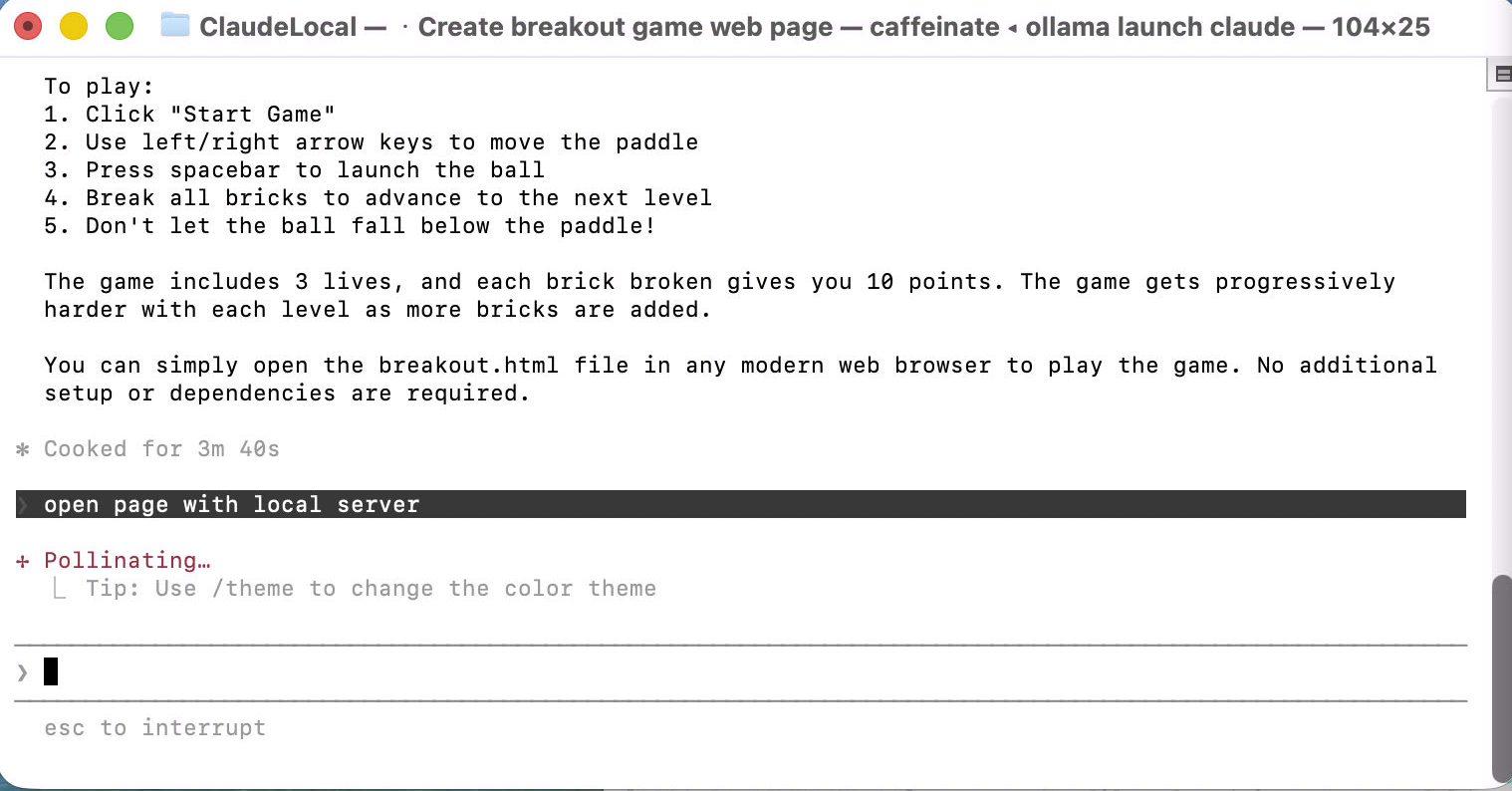
I was offered the option to open the game with a local server
It ran python3 -m http.server 8000 and asked for approval.
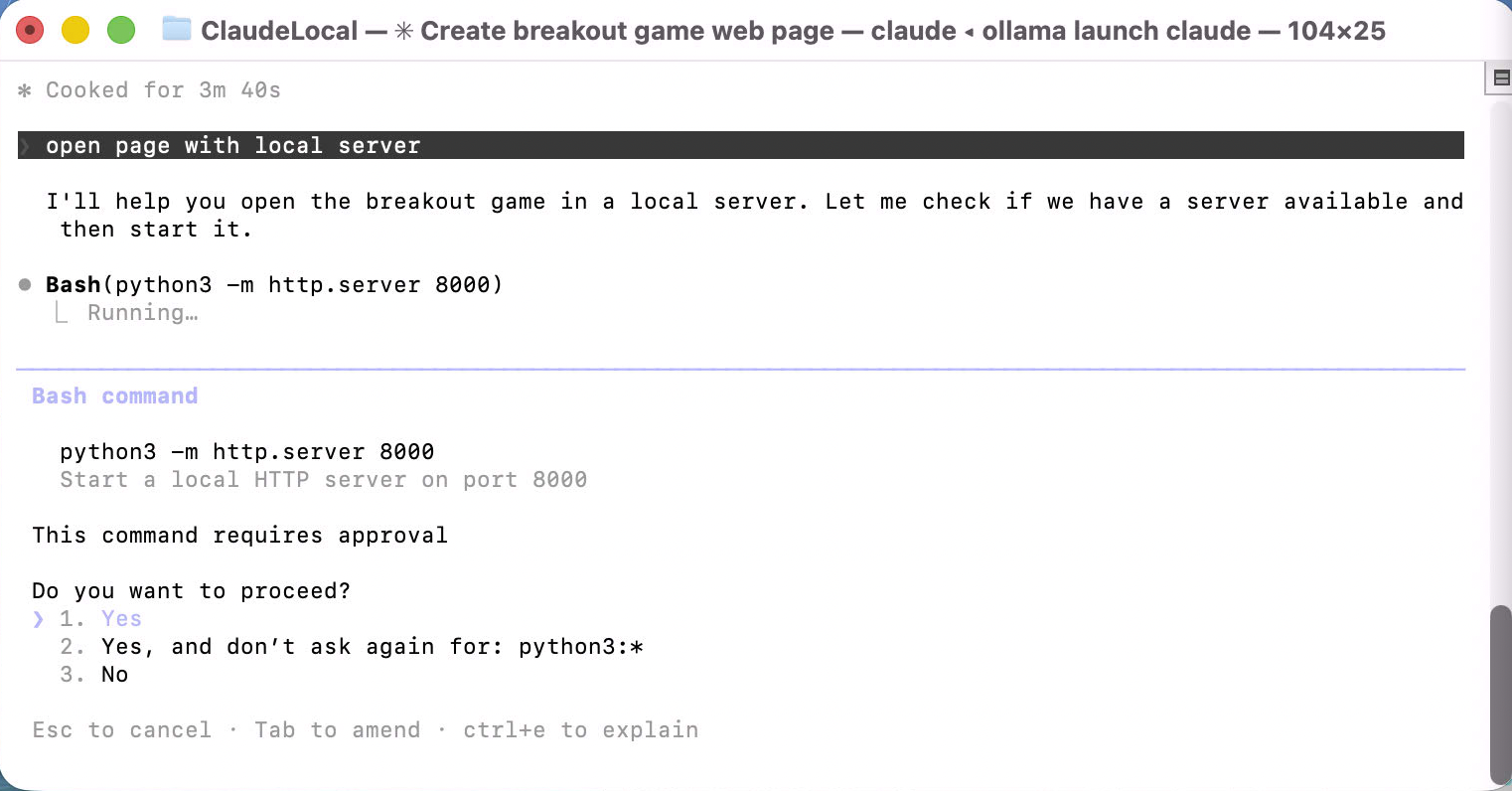
I approved running the HTTP server on port 8000
The game opened in the browser — colourful brick grid, paddle, score and lives all present.
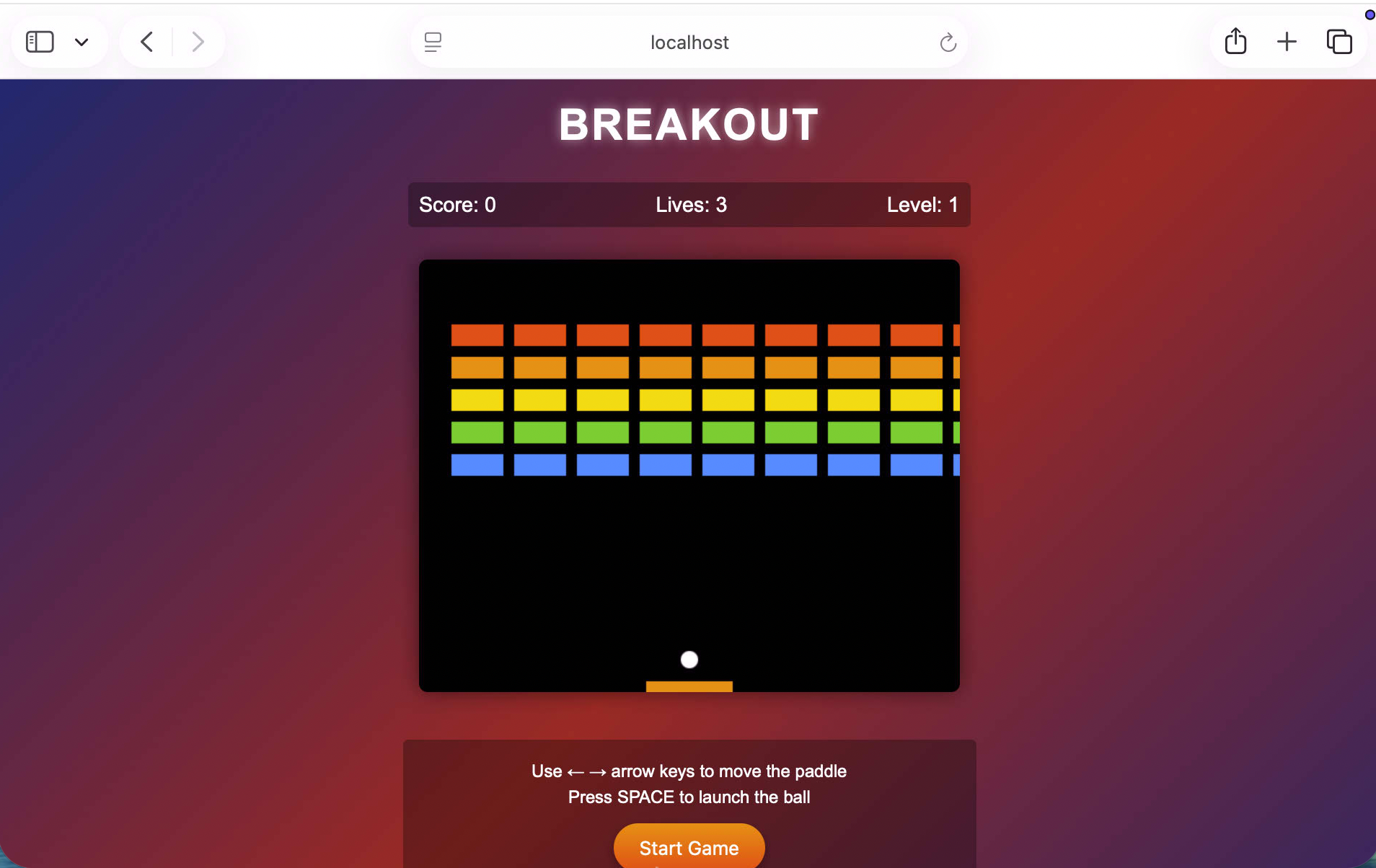
I saw the finished Breakout game ready to play
I started playing. Score 60, two lives used, bricks already clearing.
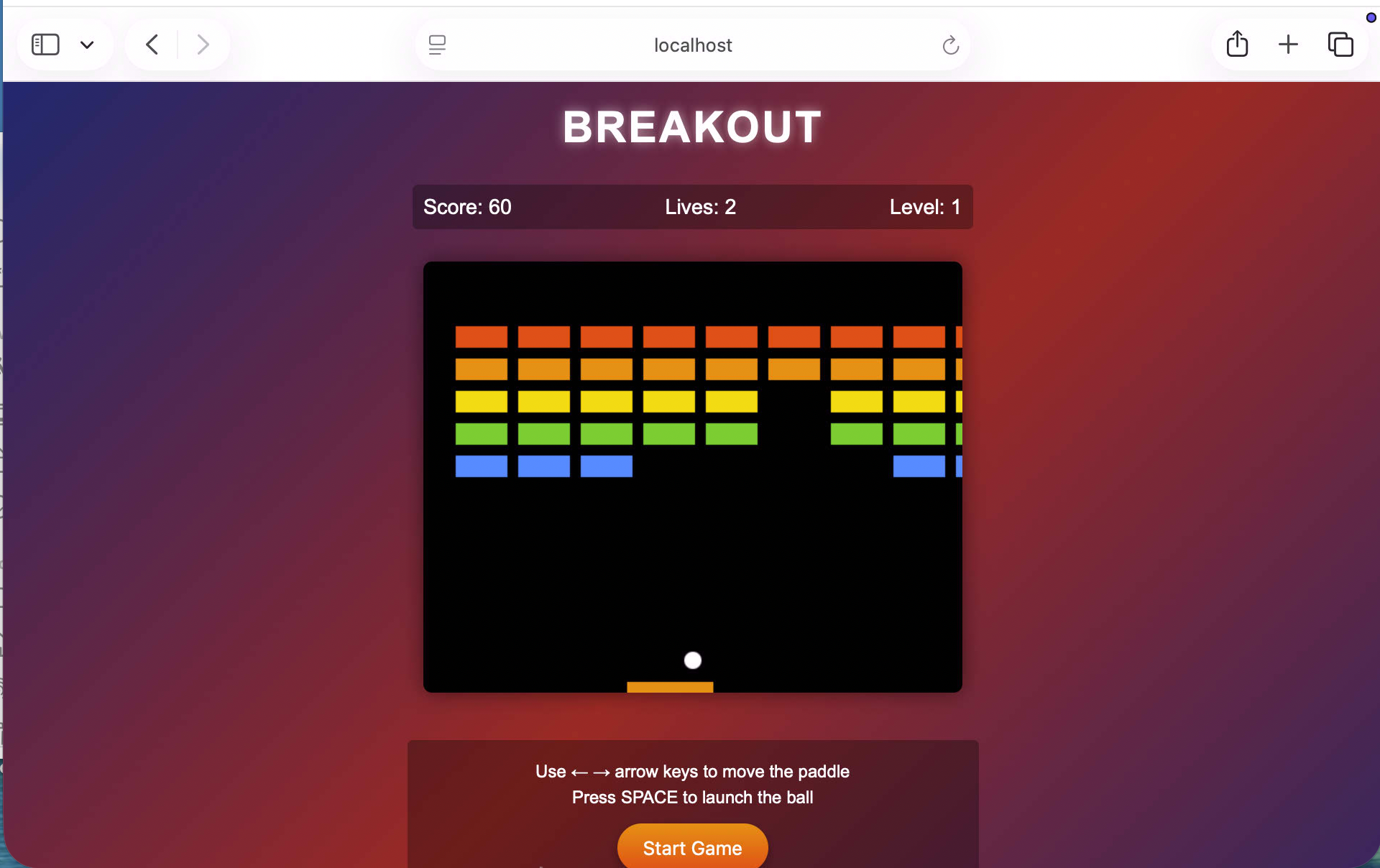
I played the game — score 60, bricks clearing nicely
The quality was genuinely good. Running a 30B coder model locally through Ollama and Claude Code produced a working game with no iteration needed. The memory footprint is steep, but on a Mac Studio with 64 GB it was fine.