Machine Learning (Part 9)
Neil Haddley • June 17, 2022
Training a neural network on the MNIST handwritten digit dataset — 60,000 training and 10,000 test images for image classification with TensorFlow
The MNIST database of handwritten digits has a training set of 60,000 examples, and a test set of 10,000 examples.
The digits have been size-normalized and centered in a fixed-size image.
What goes in, what comes out
The task is to turn a picture of a digit into the digit itself. The picture is a 28 by 28 grid, so 784 numbers. The answer is one of ten choices, 0 to 9.
So the model takes 784 numbers in and produces 10 numbers out — a score for each possible digit. To read off the answer you take the biggest: if the score for 7 is the highest, the model has recognised a 7.
 Scroll sideways, or tap the diagram to open it full size
784 pixel values in, 10 scores out, pick the biggest. During training the correct answer is written as ten numbers too — a 1 in the right slot and zeros elsewhere
I found that Keras is aware of the MNIST database. I loaded the database using the mnist.load_data() function.
I viewed a random image from the MNIST database using the pyplot.imshow() function.
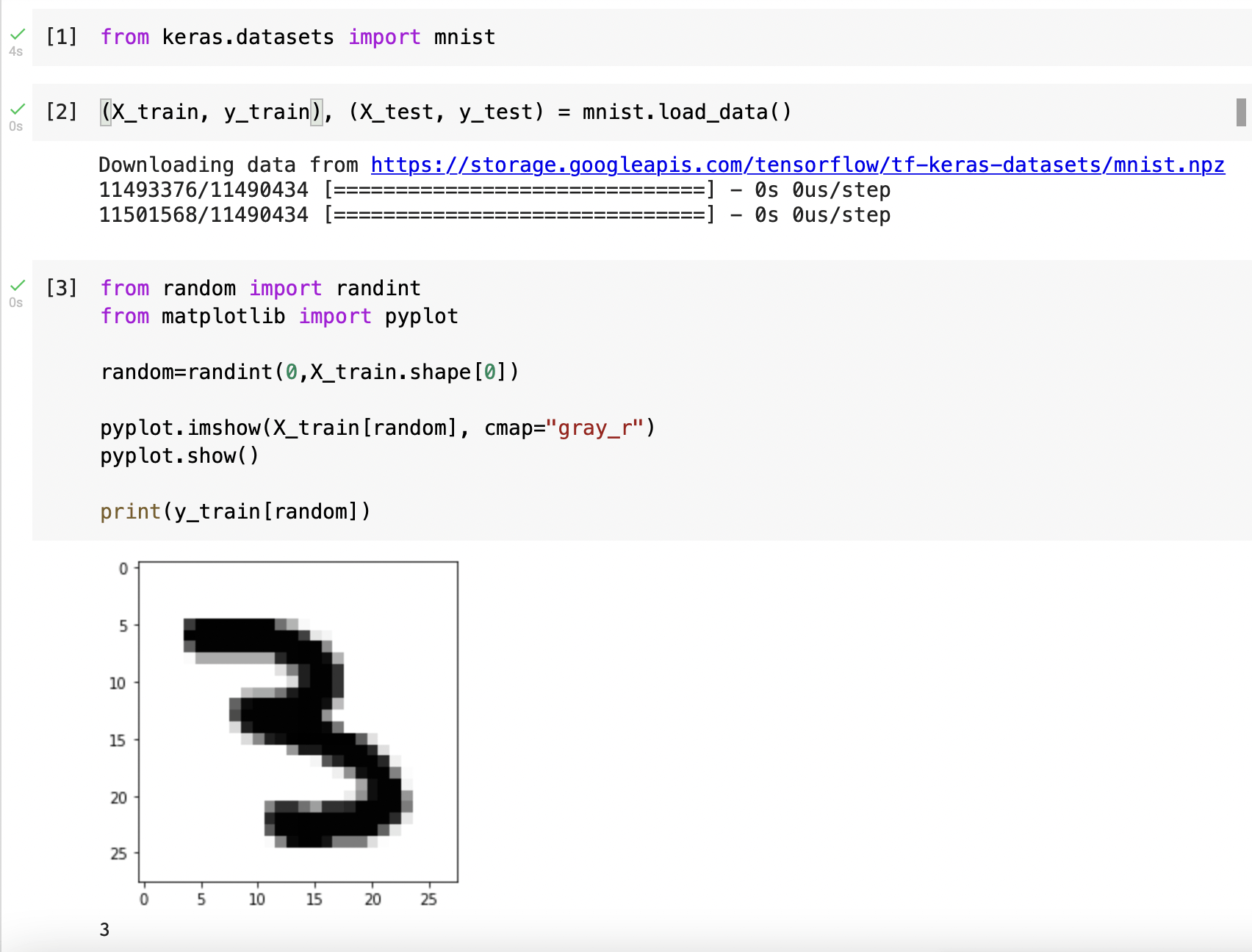
I viewed an image from the MNIST database
normalization
Normalization refers to a process that makes something more normal or regular.
I converted each image pixel value (0-255) to a float value between 0 and 1.
I converted each label (an integer between 0 and 9) to a matrix of eight zeros and a single one.
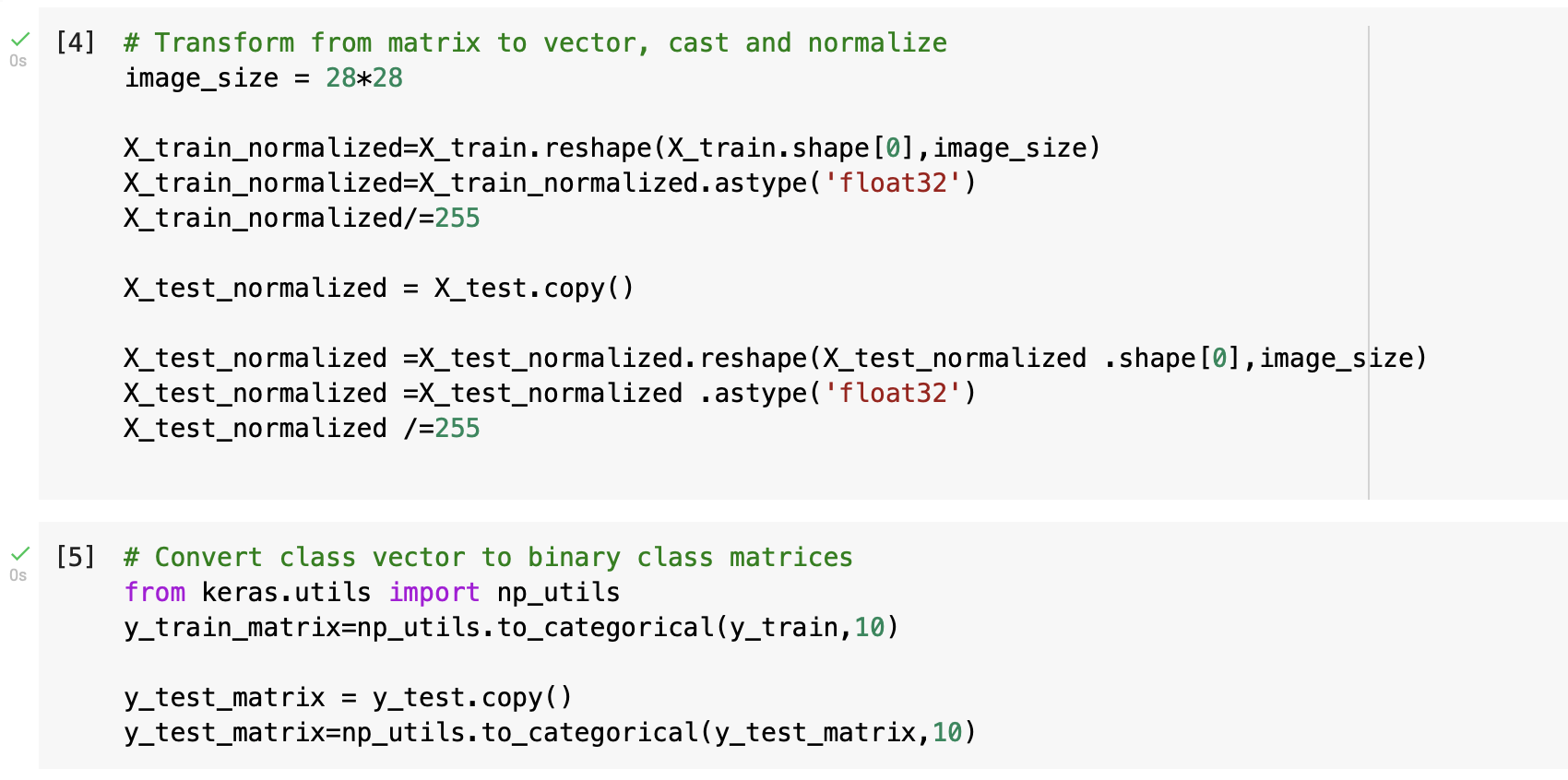
I normalized the data
model
The keras Sequential model is commonly used.
I added a Dense layer with 512 units and 784 (28*28) inputs (there are 784 pixels in each image).
I added a Dense hidden layer with 512 units.
I added a Dense output layer with 10 units (each unit corresponding to a category value from 0 to 9).
 Scroll sideways, or tap the diagram to open it full size
The whole model: three fully-connected layers turning 784 pixel values into 10 probabilities. Every pixel is wired to every unit in the first layer — there is no notion of sequence or position
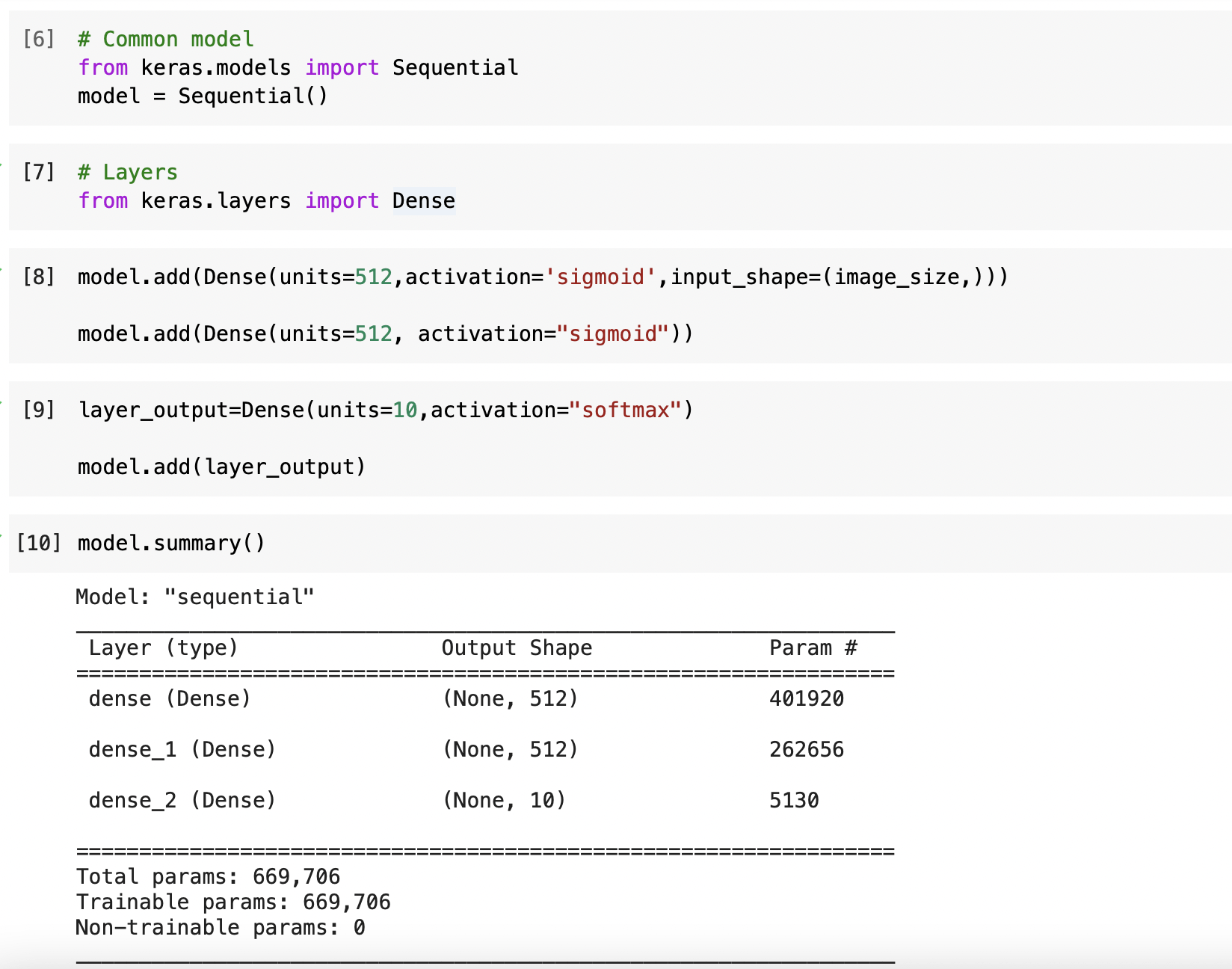
I created the model
compile and fit
After creating the model I configured and trained it.
I used the compile() function to configure the model.
I used the fit() function to train the model.
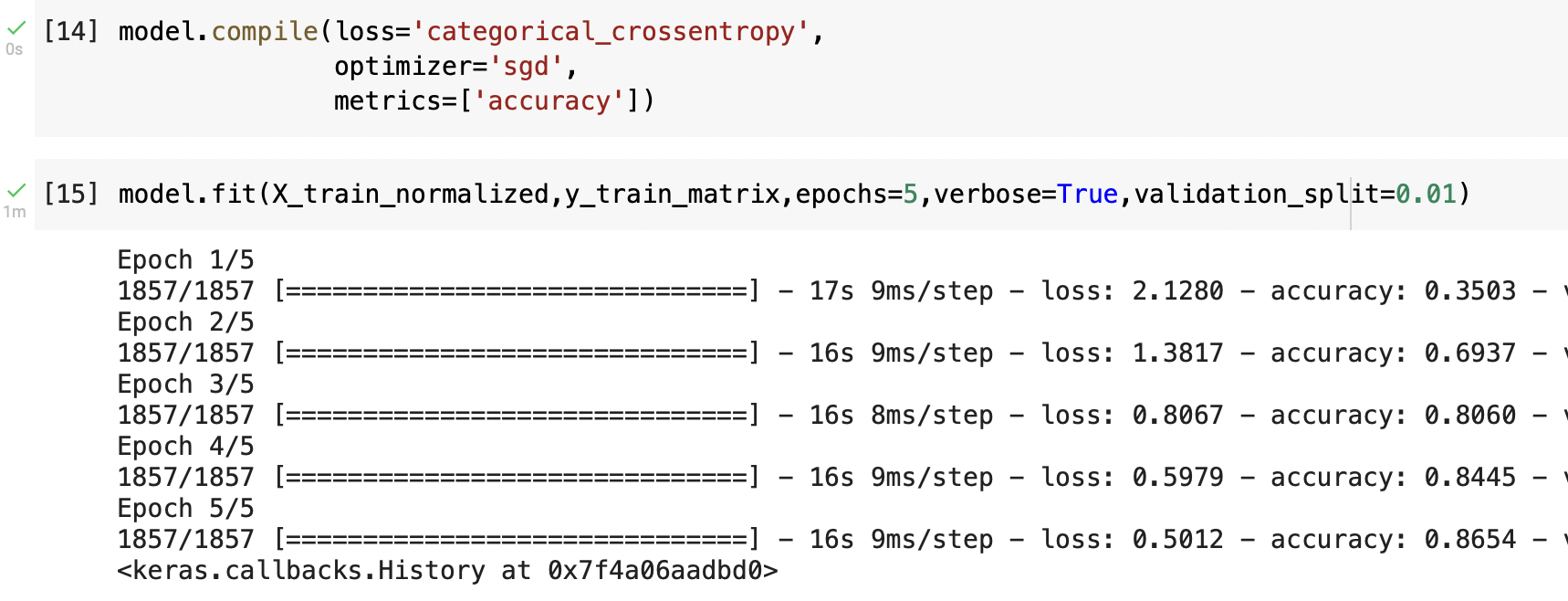
I compiled and fit the model
predict
I used the predict() function to "recognize" the test images.
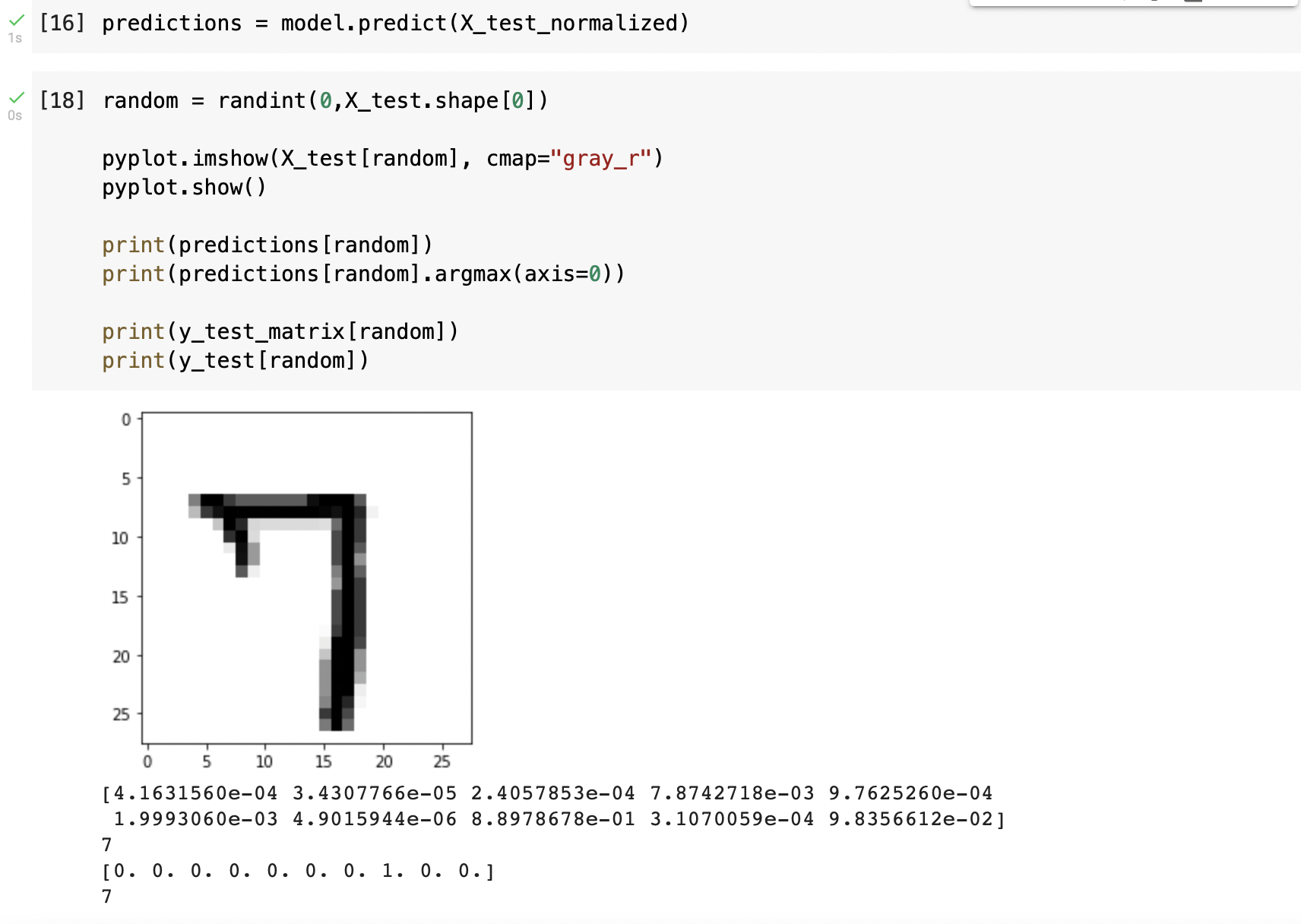
predict (recognizing the handwritten digits)